If you’re looking at adding precious metals to your portfolio, you may wonder how to allocate between the options and what the right amount is. For anyone asking, “How much silver should I own?” this article covers strategies you can use for your investment portfolio.
Why invest in precious metals?
The first question is, why should you invest in precious metals in the first place? And how do silver or gold help meet your investment needs?
Precious metals are safe-haven assets that help protect your wealth from financial crisis, geopolitical risks, and economic uncertainty. Key reasons why people add gold or silver holdings include:
Diversify from other asset classes
This is a big one because people don’t want all their eggs in one basket. Incorporating silver into your portfolio can provide a counterbalance to stocks, bonds, and real estate. All asset classes have cycles and reactions to different market situations.
Gold and silver are completely independent from other investments which helps you diversify and protect your wealth from downturns in other areas.
Inflation hedge
Gold and silver can be inflation hedges. If you own physical silver bars or coins, their price tends to rise when the dollar buys less.
There’s a limited supply of silver, and no central bank can create more of it the way it can create new dollars. When the cost of everyday goods goes up, silver usually rises too, which can help protect your purchasing power over time.
Silver’s industrial demand
One of the great things about silver investing is that this precious metal also has industrial demand. Growing industries like data centers for artificial intelligence technology, solar panels, and electric vehicles need silver.
So if you own silver and those industries keep growing, your investment can benefit from that tailwind too.
Free Resource
Want this sent to you?
Call us for a free precious metals kit — no obligation.
How much silver should I own?
How much silver should you own? There’s no single right answer, but most experts decide on allocation based on risk tolerance. A precious metal portfolio ideally consists of 75% gold and 25% silver due to silver’s higher volatility.
Here are the three most common percentage allocations:
Conservative
Conservative investors allocate 2% to 4% of their overall portfolio to silver as part of a larger gold holding, around 5-10% of your overall portfolio. This gives you inflation protection without much volatility.
Balanced
A moderate-risk portfolio has 5-10% silver, with total metals exposure around 10-15%. The appeal here is that silver’s industrial demand gives it a growth angle that gold doesn’t really have.
Aggressive
Higher-risk investors target 10-15% or more in silver, sometimes having silver as 70% of their total metals allocation. The tradeoff is more changes in price, but also more upside if industrial demand keeps growing.
Here’s a quick summary on types of allocations:
| Investor type | Silver % | Total metals % |
| Conservative | 2% to 4% | 5% to 10% |
| Balanced | 5% to 10% | 10% to 15% |
| Aggressive | 10% to 15%+ | Higher metals exposure |
Physical vs paper in your precious metal portfolio
When you buy silver bullion bars or coins, you own them outright. There’s no middleman, no counterparty risk, and no one you have to rely on. You can hold it, store it, and sell it whenever you want. Physical gold and silver give you the most separation from other assets.
Paper silver gives you exposure to silver prices through a financial product, but you never physically own the metal. Options include:
- ETFs: Exchange-traded funds track the price of silver and trade on the stock market like a regular stock.
- Mutual funds: These are traditional investments that give you broader exposure to silver-related assets like mining companies.
- Futures contracts: If you want to speculate on prices, futures let you bet on where they’re headed. These carry a lot of risk and are mostly used by traders, not long-term investors.
Physical silver holdings
Once you decide how much silver you want to buy, the next step is deciding which type. You basically have three options:
| Format | Who mints it | Premium level | Best for |
| Bars | Private refiners | Lowest | Large volume buyers wanting a lower cost per ounce |
| Coins | Government mints | Highest | Investors who want recognized coins and a higher resale demand |
| Rounds | Private mints | Mid-range | Buyers wanting lower premiums than coins with a coin-like format |
More details on these options for owning silver include:
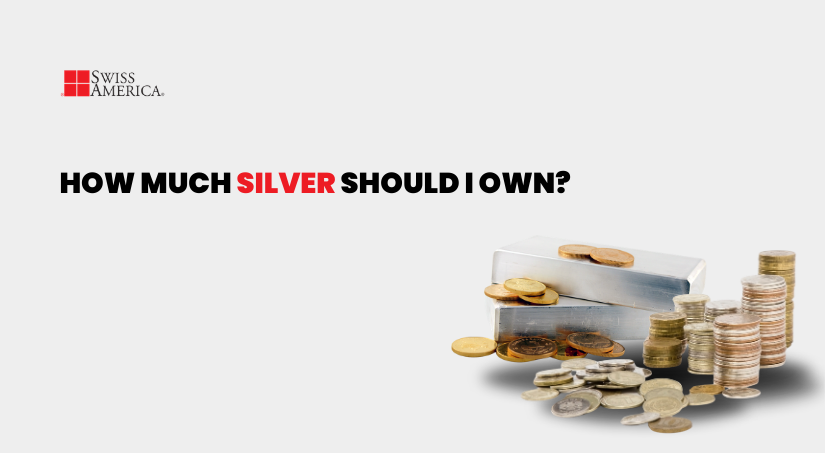
- Bars: Silver bars give you the most silver for your money since manufacturing costs are lower. They come in sizes from tiny 1-gram bars up to large 1000-ounce bars. For the same dollar amount, they also take up less storage space than silver coins or rounds.
- Coins: Minted by government mints, silver coins have a face value and legal tender. The American Silver Eagle is a popular example. Because they have government backing, they also have a higher premium over spot price.
- Rounds: These physical silver investments look like coins but aren’t. Silver rounds are minted by private companies, and don’t have a face value or legal tender. They cost less than coins but are more expensive than bars.
Adding silver investments to your portfolio
Once you’ve decided on an allocation, the next step is to build it. Here are some ideas and approaches that many investors take:
- Dollar cost averaging: Rather than buying all at once, spread your purchases out over time. This way, you’re not trying to time the market, and you average out the price you pay over multiple buys.
- Track your portfolio percentage: Silver prices go up and down, and so does the rest of your portfolio. Keep an eye on what percentage silver represents so you don’t end up over or under your target allocation without realizing it.
- Buy from reputable dealers: You can’t buy silver or gold from a bank, and not all silver dealers are the same. Stick with established companies that have been around for years and have positive reviews.
Drawbacks of owning silver
Even though investors consider silver a safe-haven asset, there are risks worth knowing before you buy:
No income
Silver doesn’t pay dividends or interest. You make money only if the price goes up and you sell. If you’re looking for your investments to generate cash flow, silver won’t do that.
Price volatility
Silver prices go up and down more than gold. Industrial demand is part of the reason. When the economy slows, silver can drop faster than other metals.
Storage and insurance
Since bars and coins are physical assets, you have to plan for storage and insurance. This means planning for a home safe, a bank deposit box, or a private depository. Each has varying costs depending on which route you take.
Silver market conditions
The Silver Institute reports that for the past six years, silver demand has exceeded new supply coming to the market. The majority of silver’s supply comes as a by-product from producing other precious metals, including lead, zinc, copper, and gold. So, it’s not easy to quickly create new mines to specifically source silver.
And, so far in 2026, silver is beating gold for Swiss America customers as 55.3% of our orders from January through July are silver.
Silver demand drivers include:
Industrial demand
Most of the industries that use silver in production continue to grow.
- Solar panels: Industry experts predict 20% growth
- Electric vehicles: Need 25-50g of silver vs 15-28g with gas-powered vehicles
- Technology: 5G infrastructure expansion and AI data center growth
Government policies
Central bank policies impact the silver investment market. If the Federal Reserve reduces interest rates, it lowers the opportunity cost of holding silver compared to other investments and can drive up the price. Other examples of policies impacting silver supply:
- China: In January 2026, China classified silver as a strategic material and implemented strict export licensing.
- Russia: Reports indicate Russia’s central bank is considering adding silver to its existing gold reserves.
- United States: The US added silver to its USGS critical minerals list, which means potential tariffs or subsidies to increase domestic supply.
Silver has been on a roll, hitting an all-time high of $121.67 an ounce on January 29th. It’s dropped since then, but analysts forecast it will rise again to even higher levels. For details on where we believe silver could head next, check out our latest silver outlook video below.
Final thoughts on the amount of silver to own
How much silver you should own comes down to your goals, your timeline, and how much risk you’re comfortable with. Most investors start by deciding on a total precious metals allocation and then figure out how much of that should be silver.
If you want to learn more, connect with the Swiss America team today!
How much silver should I own? FAQs
How many ounces of silver should I stack?
There’s no universal answer for how much you should stack. A good approach is to look at your portfolio percentage rather than a specific number of ounces:
- Budget: Start with what you can afford and add over time using dollar cost averaging.
- Allocations: Most people target 5-10% of their total portfolio in precious metals and then allocate silver as a portion of that.
Are 100 oz silver bars a good investment?
100 oz bars can be a good investment. They’re cost-effective way to buy silver since the premium over spot price is lower than with smaller bars or coins:
- Cost: Lower premium per ounce means more metal for your money.
- Storage: One large bar takes up less space than dozens of smaller ones, but you’ll still need secure storage.
- Liquidity: Harder to sell in smaller amounts if you only need to convert some of your silver to cash.
Is it better to own physical silver?
Physical silver has advantages that paper silver doesn’t offer including:
- Tangible value: Physical silver is a tangible asset that can hold its worth even in extreme scenarios where paper assets and digital systems stop functioning.
- Direct ownership: When you own physical silver, there’s no bank or institution standing between you and your investment.
- Privacy and control: You own it, you store it, and you can move or sell it without a paper trail the way you can’t with ETFs or other financial products.
Will silver ever reach $100 an ounce?
Silver already hit $100, reaching an all-time high of $121.67 on January 29, 2026, before lowering to around $81.50 by mid-February. Most analysts think it’ll get there again because of:
- Supply: The market is currently in its sixth consecutive year of structural supply deficit.
- Industrial demand: Solar panels, EVs, and AI infrastructure need silver and the demand in these industries keeps growing.
- Forecasts: Bank of America sees $135-$309 by the end of 2026. BNP Paribas, Citigroup, and others also predict triple digits in the near term.
What resources does Swiss America have on precious metals investing?
Swiss America has been helping investors buy gold and silver for over 40 years and provides a number of educational tools and resources:
- Articles and guides: Swiss America’s website covers topics like how Gold IRAs work to what you should consider for storing your silver coins or bars.
- Podcast and market updates: Regular coverage of what’s happening with gold and silver prices and what’s driving them up or down.
- Support team: You can work with a dedicated support team to talk through your options and figure out what makes sense for your situation.
The information in this post is for informational purposes only and should not be considered tax or legal advice. Please consult with your own tax professionals before making any decisions or taking action based on this information.