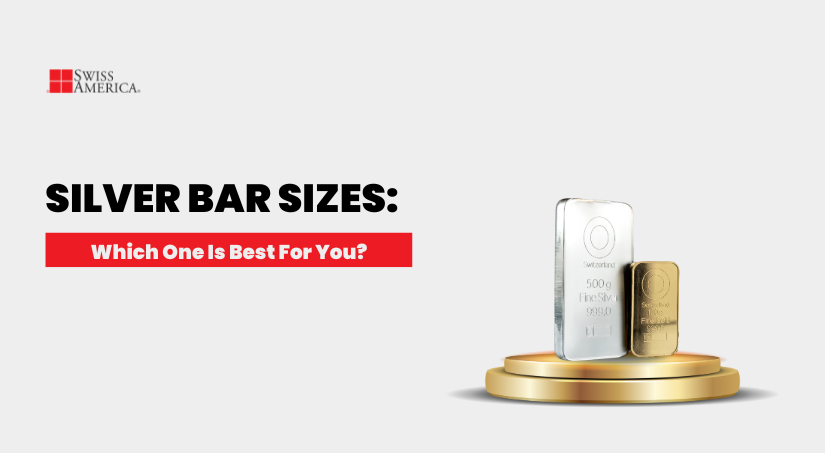
Silver bar sizes range from 1 oz pieces you can hold in your palm to 1,000 oz institutional bars that weigh over 60 pounds. There are six common silver bar sizes, and the best one for you depends on your storage capacity, how long you plan to hold silver bullion, and whether you value easy resale or a lower per-ounce cost.
Silver trades at ... per ounce, so a single bar can cost anywhere from pocket change to tens of thousands of dollars depending on the size you choose.
Key takeaways
- Six common sizes: Common sizes include 1 oz, 5 oz, 10 oz, 1 kg, 100 oz, and 1,000 oz.
- 1 oz bars: Easiest to sell and store, but they carry higher per-ounce premiums.
- 10 oz and 100 oz bars: Provide flexibility and cost efficiency.
- 1,000 oz bars: These are institutional standard bars, with the lowest premiums but the greatest storage and resale demands.
What are the common silver bar sizes?
Investment-grade silver bars are typically at least 99.9% pure (.999 fine) and come stamped with a serial number and certification mark confirming authenticity and purity. The largest, the 1,000 troy ounce bar, is the recognized institutional standard, known as the LBMA Good Delivery bar.
Here is how six sizes break down:
1 troy ounce (31.1 grams)
A 1 oz silver bar measures about 50.8mm long, 25.4mm wide, and 3.175mm thick. It’s roughly the size of a U.S. half-dollar coin. Because it’s priced by the troy ounce, it’s the most accessible entry point for new investors.
5 troy ounces (155.5 grams)
A 5 oz bar runs about 63.5mm long, 38.1mm wide, and 6.35mm thick. It weighs about as much as a baseball and fits in a pocket.
10 troy ounces (311 grams)
At 88.9mm long, 50.8mm wide, and 6.35mm thick, a 10 oz bar weighs roughly the same as a full soda can. This is a popular size for investors who want more metal without jumping to 100 ounces.
1 kilogram (32.15 troy ounces)
A kilo bar measures about 114.3mm long, 57.15mm wide, and 12.7mm thick. It fits comfortably in your hand but weighs about as much as a pineapple.
100 troy ounces (3,110 grams)
At roughly 139.7mm long, 79.4mm wide, and 25.4mm thick, the 100 oz bar is comparable in size to a large smartphone but weighs about as much as a brick. This size offers lower per-ounce premiums for investors building larger positions.
1,000 troy ounces (31.1 kilograms)
The 1,000 oz bar measures about 304.8mm long, 127mm wide, and 82.5mm thick. It weighs about 68.6 pounds. These Good Delivery bars meet LBMA standards for institutional trading and are used primarily by banks, ETF custodians, and large dealers.
How do silver bar sizes compare?
Here is a quick reference for dimensions, weight, and best use case:
| Bar size | Weight | Approx. dimensions | Best for |
| 1 oz | ~31.1g | 50.8 × 25.4 × 3.18 mm | First-time buyers, easy resale |
| 5 oz | ~155.5g | 63.5 × 38.1 × 6.35 mm | Balanced value and portability |
| 10 oz | ~311g | 88.9 × 50.8 × 6.35 mm | Popular investment size |
| 100 oz | ~3,110g | 139.7 × 79.4 × 25.4 mm | Bulk investment, lower premiums |
| 1 kg | ~1,000g | 114.3 × 57.15 × 12.7 mm | International standard |
| 1,000 oz | ~31.1 kg | 304.8 × 127 × 82.5 mm | Institutional storage |
Free Resource
Want this sent to you?
Call us for a free precious metals kit — no obligation.
What are the types of silver bars?
Not all silver bars are manufactured the same way. The process affects appearance and cost.
- Cast bars (ingots): Molten silver is poured into molds and allowed to cool. These bars have a rougher, more rustic look and carry lower premiums.
- Minted bars: Refined silver blanks are stamped with designs, weight, and purity markings, giving minted bars a polished finish. They can qualify for a precious metals IRA when they meet the standard minimum fineness levels.
- Hand-poured bars: Created by pouring molten silver into molds by hand. Each bar has slight variations, which appeals to some collectors.
- Extruded bars: Silver is forced through a die to create uniform bars. This process produces consistent shapes and clean edges.
Popular silver bar brands
The most recognized silver bar manufacturers include:
- Royal Canadian Mint
- PAMP Suisse
- Sunshine Minting
- Johnson Matthey
- Asahi Refining
Bars from these refiners come with serial numbers and assay certificates confirming purity.
How to choose the right silver bar size
Match the size to your hold time
If you plan to sell within a few years, smaller bars (1 oz to 10 oz) give you more flexibility. You can sell one or two bars without liquidating your entire position.
If you’re building a long-term position and don’t plan to sell in pieces, larger bars (100 oz or more) give you more silver per dollar spent.
Consider storage before you buy
You can store bars of 10 ounces or smaller at home in a safe or in a bank safe deposit box. Larger bars usually require third-party storage at a depository.
If you’re investing through a self-directed IRA, your metals must be held by an approved custodian or depository rather than stored at home, regardless of the bar size.
Understand the resale tradeoff
Smaller bars carry higher per-ounce premiums because manufacturing costs are spread across less metal. But smaller bars also sell faster because more buyers can afford them.
Larger bars have lower premiums but may take longer to sell. A 1,000 oz bar requires a buyer with substantial capital or a dealer willing to purchase it.
Silver bars compared with silver coins
Coins and bars are both solid options for silver investing:
| Factor | Silver bars | Silver coins |
| Premium over spot | Lower | Higher |
| Liquidity | Good for common sizes | Often faster sale |
| Collectibility | None | Potential numismatic value |
| IRA eligibility | Yes, if .999 fine | Yes, for approved coins |
| Recognition | Varies by brand | Instant (government mint) |
Government-minted coins like the American Silver Eagle carry higher premiums because of minting costs and legal tender status. But they’re instantly recognizable, which can speed up resale.
Bars give you more silver per dollar. Most investors use bars for long-term holdings and coins when they want smaller, more liquid positions.
Why should you buy silver bars?
Some of the reasons that investors decide to buy silver include:
Affordability compared to gold
Silver costs far less per ounce than gold, so you can accumulate more metal with the same dollar amount. That affordability is one reason many people begin owning precious metals with silver investing.
The gold-to-silver ratio is currently 69, and some investors see a wide ratio as a sign that silver is undervalued relative to its historical average.
Industrial demand supports prices
Silver has industrial applications in electronics, medical devices, and electric vehicles. According to the Silver Institute, industrial demand reached a record 680.5 million ounces in 2024, led by electronics and electrical demand, with solar (photovoltaic) demand also contributing. Unlike gold, which is primarily a monetary metal, silver has genuine utility that creates ongoing demand regardless of investment sentiment.
Portfolio diversification
Silver moves differently than stocks and bonds. Adding physical silver can reduce overall portfolio volatility, especially during periods of financial stress or currency weakness.
No counterparty risk
When you own physical silver bars, you don’t depend on anyone else like a bank, broker, or fund manager to honor an obligation. The metal is yours outright.
We covered silver investing on one of our recent podcasts:
Drawbacks of silver bars
Silver isn’t a perfect investment, and there are some cons to consider:
- Volatility: Silver moves more sharply than gold in both directions. Expect bigger swings up and down.
- Storage costs: Physical metal requires secure storage. Third-party depositories charge annual fees, and home storage means accepting theft risk.
- No income: Silver bars don’t pay dividends or interest. Your return comes entirely from price appreciation.
- Capital gains tax: If you hold silver for more than one year and sell at a profit, you pay the collectibles tax rate of up to 28%, not the lower long-term capital gains rate.
How to start buying silver bars
Step 1: Choose a reputable dealer
Look for a dealer with at least a 10-year track record that has been through market ups and downs. A reputable dealer offers a two-way market where they’ll buy back when you want to sell. They should also settle and deliver your metals promptly and disclose both the investment upside potential and the downside risks.
Step 2: Decide on size and quantity
Start with what fits your budget and storage capacity. In 2025, 39.5% of Swiss America’s customers bought in the 0.5 to 1 oz range. Then, add larger positions over time as you become more comfortable with the process.
Step 3: Buy your metals and store securely
Once you’ve picked your dealer and amount, place your order. For non-IRA purchases, you can store at home in a safe, in a bank safe deposit box, or at a third-party depository. For IRA purchases, your custodian will arrange storage at an approved facility.
Step 4: Monitor your position
Track silver prices through financial news sites or a dealer’s online portal. Decide in advance under what conditions you would add to your position, sell, or trade into gold based on the gold to silver ratio.
Final thoughts on silver bar sizes
The best silver bar size depends on your investment amount, storage situation, and how long you plan to hold. Smaller bars sell faster and store easily. Larger bars give you more metal per dollar but require more planning on both ends of the transaction.
To learn more about adding silver to your portfolio, connect with the Swiss America team today.
Silver bar sizes: FAQs
What size is a standard silver bar?
The 1,000 troy ounce bar. This is the recognized institutional standard, weighing about 68.6 pounds and meeting LBMA Good Delivery specifications. Individual investors, by contrast, usually buy 1 oz, 10 oz, and 100 oz bars.
What size silver bar is best?
It depends on your hold time and storage. Smaller bars (1 oz to 10 oz) are easier to trade and store, so they suit shorter hold times. Larger bars carry lower per-ounce premiums but can take longer to sell.
How large is a 1,000 oz silver bar?
About 68.6 pounds. It measures roughly 304.8mm long, 127mm wide, and 82.5mm thick, or about 12 inches by 5 inches by 3.25 inches. Its size and weight are why it’s used mainly for institutional storage rather than home holding.
Are bigger silver bars cheaper?
Per ounce, yes. Larger bars carry lower premiums over spot because manufacturing costs are spread across more metal. The tradeoff is that big bars need a buyer with more capital, so they can be slower to sell than 1 oz or 10 oz bars.
The information in this post is for informational purposes only and should not be considered tax or legal advice. Please consult with your own tax professionals before making any decisions or taking action based on this information.