Press ESC to close

What Is Silver Bullion? 6 Things To Know

Silver has been one of the most talked-about precious metals in 2026. Prices have moved sharply, and a lot of investors are paying attention for the first time. If you’re asking what is silver bullion and whether it’s worth buying, this article covers everything you need to know.

What is silver bullion?

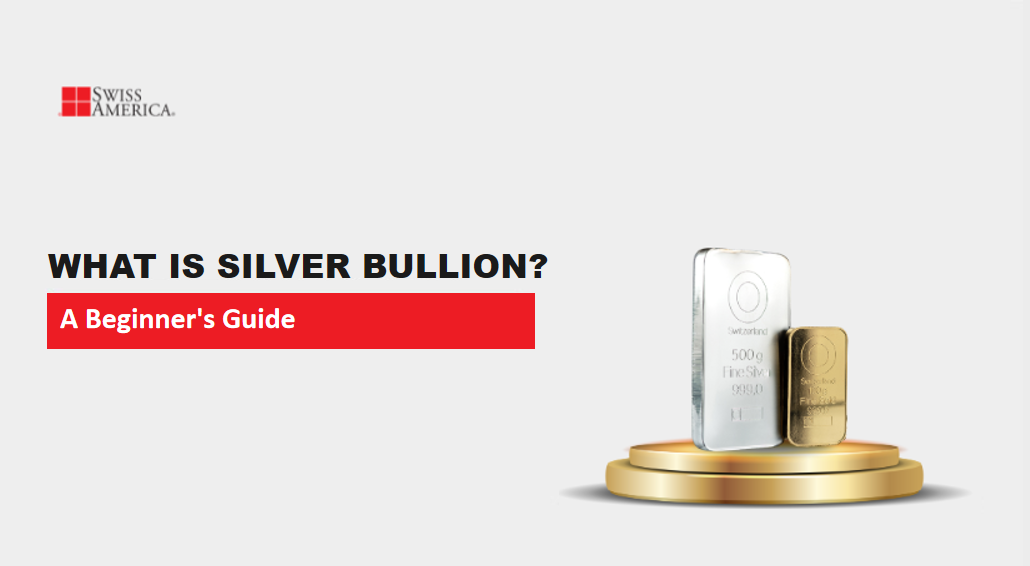
Silver bullion is physical silver valued by its weight and purity. That’s it. Not collectible value, not historical significance, and no aesthetic premium. You’re buying metal.

The word “bullion” refers to investment-grade silver in a standardized form like bars, coins, or rounds, where the price is tied almost entirely to how much silver is in the piece, not what it looks like or who made it.

Silver bullion vs jewelry

When you buy a sterling silver necklace, you’re getting 92.5% silver mixed with other metals. The craftsmanship, the brand, and the retail markup get added into the price. If silver prices rise 20%, your necklace doesn’t automatically become worth 20% more. Resale is complicated, and most buyers won’t care what you paid.

Silver bullion is different. A one-ounce silver bar from a reputable refinery contains .999 fine silver, which is 99.9% pure. Its value tracks the silver spot price directly. When you’re ready to sell silver coins or bars, buyers around the world know exactly what they’re getting.

Silver bullion vs. numismatic coins

Collectible or numismatic coins are a separate category. A rare 1893-S Morgan Dollar might sell for thousands, but that price has almost nothing to do with silver. Numismatic value comes from scarcity, condition, and collector demand.

Free Resource

Want this sent to you?

Call us for a free precious metals kit — no obligation.

📞 Call 1 (800) BUY-COIN

The three forms of silver bullion

Silver investment bullion comes in three forms:

Silver coins

Silver bullion coins are produced by government mints. The American Silver Eagle comes from the U.S. Mint. The Canadian Silver Maple Leaf comes from the Royal Canadian Mint. They carry legal tender status and are backed by the issuing government for weight and purity.

Government coins usually have the highest premiums of any bullion form. This is because you’re paying for the design, the guarantee, and the brand recognition. For a first-time buyer, that recognition is valuable because silver coins are universally accepted and easy to resell.

Coins are also the most popular form, with 97.6% of Swiss America customers buying them over bars in 2025.

Silver bars

Silver bars are cast or minted by private refineries. They have lower premiums than coins because of lower production costs. A 10-ounce bar or a 100-ounce bar gives you more silver for your dollar than buying the equivalent weight in coins.

The tradeoff is familiarity. A stranger buying your silver bar needs to verify it in ways a government coin doesn’t require. If you’re buying in bulk, bars are the way to go. For someone spending a few hundred dollars to start, coins are usually the better entry point.

Silver rounds

Silver rounds look like coins but aren’t. They’re produced by private mints, so they don’t have legal tender status or government backing. They have lower premiums than official coins while being more recognizable than plain bars.

Junk silver coins

Junk silver coins are pre-1965 U.S. coins, dimes, quarters, and half dollars that were made with 90% silver. They’re called “junk” not because they’re worthless, but because they have no collectible value. These coins are not bullion, but they are an affordable way to buy silver.

What are silver bullion purity standards?

The global benchmark for investment-grade silver is .999 fine, meaning 99.9% pure silver. This is the standard used by COMEX futures contracts, the London Bullion Market Association, and the majority of government and private mints worldwide.

Some coins like the Canadian Silver Maple Leaf are at a higher level of .9999. The additional purity doesn’t make a huge difference in actual silver content per ounce. For most buyers, the premium difference doesn’t always justify the upgrade.

What does .999 fine silver mean?

The number represents parts per thousand. 999 out of 1,000 parts are pure silver, with trace amounts of other metals remaining from the refining process. Trace elements are what’s left after heat and chemical processing remove impurities from raw ore.

Sterling silver is .925 pure and is an alloy made for durability in jewelry and silverware. Junk silver .900 refers to pre-1965 U.S. coins with known silver content.

Purity stamps on bars and coins

On all silver bars, you should always see four pieces of information:

  • Weight
  • Purity
  • Refinery hallmark
  • Serial number

Government silver bullion coins guarantee purity by law, and it’s stamped directly on the coin. The American Silver Eagle reads “1 OZ. FINE SILVER” on the reverse. The Maple Leaf is stamped “.9999 FINE SILVER.” Government backing removes the need for individual verification.

The gold-to-silver ratio

The gold-to-silver ratio tells you how many ounces of silver it takes to buy one ounce of gold. It’s one of the oldest metrics in precious metals investing and one of the most misunderstood.

To calculate it:

Gold price/silver price = ratio

As of this writing, gold is currently trading at $5,000 per ounce and silver at $81 per ounce, so the ratio is:

$5,000 / $81 = 61.7

That means it takes roughly 62 ounces of silver to buy one ounce of gold. The ratio is approximately 61.7:1.

What the ratio tells you about the silver market

A high ratio means silver is cheap relative to gold. A low ratio means silver is expensive relative to gold. Historically, the ratio has averaged between 50:1 and 70:1. A few examples:

  • 1980: The ratio dropped to around 17:1 during silver’s peak run
  • 2011: It fell to roughly 32:1 as silver approached $50 per ounce
  • 2020: It grew to nearly 125:1 during the COVID market panic, one of the highest readings on record
  • Historical average: Roughly 50:1 to 70:1 over the past several decades

At 61.7:1 today, the ratio is within its historical average range and means that neither metal is over- nor undervalued relative to the other right now.

We think silver prices will keep growing and recently discussed reasons why on our podcast:

What are the benefits of investing in silver assets?

Reasons why investors turn to silver include:

Inflation hedge

Silver is limited in supply, and you can’t make more of it on a printing press. When central banks expand the money supply, the purchasing power of your dollars shrinks. Silver’s supply grows at roughly 1-2% per year, which means it can’t keep up with money printing even if miners tried.

During the high-inflation years of the 1970s, silver went from around $1.50 an ounce to nearly $50. More recently, as inflation hit 40-year highs in 2022, silver prices climbed along with gold as investors moved into tangible assets.

Safe haven

Silver has historically held value during periods of financial stress. During the 2008 financial crisis, bank failures spread faster than regulators anticipated. The FDIC came under pressure it hadn’t seen in decades. Physical silver carried none of that counterparty risk.

The 2023 collapse of Silicon Valley Bank was a reminder that bank deposits aren’t unconditionally safe. Silver doesn’t depend on a bank’s solvency, a company’s earnings, or a government’s creditworthiness. It’s worth what it’s worth, independent of the financial system.

Portfolio diversification

Most retirement portfolios have a mix of stocks and bonds. Both of those react to corporate earnings, interest rates, and Fed policy. When those factors turn negative, stocks and bonds often fall together.

Silver’s price moves on a different set of drivers. It’s impacted by industrial demand, currency strength, mining supply, and investor sentiment. That’s why it can help diversify your wealth. Over the past 50 years, silver has had periods of low or negative correlation with equities, which is exactly what diversification is supposed to provide.

Affordability vs. gold

People often refer to silver as the working man’s gold. At current prices, an ounce of gold costs roughly 61 times more than an ounce of silver. That gap makes silver an easier way to get started with precious metals investing without committing thousands of dollars to a single coin.

A first-time buyer can purchase a one-ounce silver coin for a relatively small amount above spot price. Lower price doesn’t mean lower quality as an asset class. Silver and gold share the same fundamental properties as stores of value. The difference is accessibility.

Here’s a quick summary of the benefits of silver investing:

BenefitImpact
Inflation hedgeThere’s a limited supply, so it doesn’t lose value like currency can
Safe havenPhysical silver carries no counterparty risk
DiversificationSilver responds to different market forces than equities and bonds
AffordabilityLower price per ounce makes it easier to start investing than gold

Popular silver bullion coins

Here are some of the most popular silver coins that you can buy from a reputable bullion dealer:

American Silver Eagle

The American Silver Eagle is the official silver bullion coin of the United States. Minted by the U.S. Mint since 1986, each coin contains exactly one troy ounce of .999 fine silver. The Walking Liberty design on the front has appeared on American currency since 1916.

American Silver Eagle Coin

Canadian Silver Maple Leaf

Canada’s Royal Canadian Mint has produced the Silver Maple Leaf since 1988. It’s one of the purest silver coins and has one troy ounce of .9999 fine silver. The mint added a micro-engraved laser mark in 2014 for additional security.

Canadian Silver Maple Leaf

Australian Silver Kangaroo

The Perth Mint introduced the Silver Kangaroo in 2016. Each coin contains one troy ounce of .9999 fine silver and is legal tender in Australia. The kangaroo design changes each year.

Australian Kangaroo

Austrian Silver Philharmonic

Austria’s Silver Philharmonic was first issued in 2008. Each coin features the instruments of the Vienna Philharmonic Orchestra.

Austrian Silver Philharmonic

British Silver Britannia

The Royal Mint has produced the Silver Britannia since 1997. Each coin contains one troy ounce of .999 fine silver. The Britannia image has appeared on British coinage for over 1,800 years, and the Mint added security features to each release starting in 2013.

British Silver Britannia

Popular silver bullion bars

Popular silver bullion bars include brands like:

  • PAMP Suisse
  • Engelhard
  • Johnson Matthey
  • The Royal Canadian Mint

How to buy silver bullion?

You can buy silver coins or silver bars from online dealers, local coin shops, and government mints. Premiums, buyback policies, and customer support vary widely between sellers. Buying through an established company like Swiss America means you have a dedicated team behind the purchase and a buyback program in place when you’re ready to sell.

What to look for in a reputable bullion dealer

A reputable dealer will be upfront about premiums, buyback policies, and any fees before you buy. Look for membership in the Industry Council for Tangible Assets (ICTA) or the Professional Numismatists Guild (PNG). Check out customer reviews on the Better Business Bureau and the company website, as well as the dealer’s policy for customer satisfaction.

Silver IRAs: Buying silver products for retirement

A Silver IRA is a self-directed individual retirement account that holds physical silver instead of paper assets like stocks or bonds. It works the same way as a traditional IRA in terms of tax advantages and contribution limits, but the underlying asset is physical silver. You can fund one through a new contribution or by rolling over an existing IRA or 401(k).

How to store silver bullion bars or coins

Since bullion coins and bars are tangible assets, you’ll need to decide how you want to store them. Options include:

  • At-home storage: You can store your bullion at home. It’s best to use a fireproof safe bolted to the floor if you go this route.
  • Bank safe deposit boxes: Bank deposit boxes are an option, but be aware that the FDIC does not insure the contents.
  • Vault storage: These are purpose-built facilities for storing physical precious metals. They have different levels of storage and bundle insurance into the fees.
  • Insuring your bullion: Standard homeowner’s policies may cap coverage for precious metals at $1,000 to $2,500. You’ll likely need a separate rider or standalone policy for full coverage.

What are the risks and considerations of silver investing?

While silver is a great way to diversify your investment portfolio, there are drawbacks to consider:

No income or yield

Silver pays nothing while you hold it. No dividends, no interest, no distributions. Your return depends entirely on price appreciation. If you need your portfolio to generate regular cash flow, silver doesn’t provide it.

Higher price volatility

Silver has bigger swings than gold. A smaller investor base means that even small changes in demand can create large price swings. This can work in your favor in a bull market, but it can also be a drawback when sentiment turns negative.

Storage and insurance costs

Physical silver takes up more space per dollar of value than gold, and you’ll need to decide on storage options. Whether you choose a home safe, a bank safe deposit box, or a paid depository, there are costs to consider. Also, standard homeowners insurance typically doesn’t cover precious metals without a separate rider.

Premiums above spot price

When you buy silver bullion, you pay more than the spot price. That premium covers manufacturing and distribution, and it varies depending on the form and size you buy. Coins and rounds often carry higher premiums than bars. You’ll need price appreciation above your purchase premium to break even on a sale.

Less favorable tax treatment

The IRS classifies silver bullion as a collectible, which means long-term capital gains get taxed at a maximum rate of 28%, compared to 20% for stocks. Short-term gains are taxed at your ordinary income rate, the same as any other asset. Holding silver inside a precious metals IRA can help you avoid this higher rate.

Key considerations that everyday investors should be aware of when investing in silver bullion coins or bars:

RiskInvestor impact
No incomeSilver does not pay interest or dividends
Price volatilityPrices can rise and fall quickly
Storage costsYou may need to pay for secure storage or insurance
PremiumsYou pay above spot price and need price growth to break even
TaxesGains may be taxed at higher collectible rates

Final thoughts on silver for your investment portfolio

Adding silver bullion to your strategy depends on your investment goals. If you want to diversify and hold for the long term, silver gives you a real asset that you can hold, store, and sell anywhere in the world.

If you want to learn more about adding silver to your portfolio, connect with the Swiss America team today.

What is silver bullion? FAQs

Is silver bullion a good investment?

Silver bullion can be a good investment for people looking to diversify outside of stocks and bonds. Like gold, it holds real value, is recognized globally, and can be bought in a physical form you actually own.

  • Supply and demand: Silver is used heavily in industrial applications like solar panels and electronics, which means demand can go beyond just investor interest.
  • Lower entry point: Silver costs less per ounce than gold, making it easier to start building a position with smaller amounts of capital.
  • Portfolio fit: Most financial advisors recommend keeping 5-15% of a retirement portfolio in precious metals, and silver can be part of that allocation alongside gold.

What’s the minimum amount I need to start investing in silver?

There’s no universal minimum for buying silver, but the amount you need depends on how and where you buy it. Swiss America has a $5,000 minimum to get started with a precious metals IRA.

  • Physical bullion: You can buy a single silver coin or small bar for as little as $30-$50, making it one of the more accessible ways to start owning a tangible asset.
  • Silver IRA: If you want to hold silver inside a tax-advantaged retirement account, minimums are higher since there are custodian and storage fees to account for.
  • Ongoing contributions: For 2026, IRA contribution limits are $7,500 per year if you’re under 50, or $8,600 if you’re 50 or older, so you can build your position over time.

Can I put silver bullion in an IRA?

Yes, you can hold physical silver in a self-directed IRA, but it has to meet IRS requirements. Not all silver qualifies, so it’s worth knowing the rules before you buy.

  • Purity standard: The IRS requires silver held in an IRA to be at least 99.9% pure. Most silver bullion coins and bars from approved mints meet this threshold.
  • Approved products: Common qualifying options include the American Silver Eagle and Canadian Silver Maple Leaf. Your silver dealer can confirm which products are IRA-eligible before you purchase.
  • Storage rules: You can’t keep IRA silver at home. The IRS requires it to be stored in an approved depository, which your custodian arranges on your behalf.

How do I sell silver bullion when I’m ready?

Selling silver bullion is straightforward. Silver is recognized globally, so you have several options when you’re ready to convert it to cash.

  • Sell back to your dealer: Many reputable dealers, including Swiss America, have a buyback program that makes selling simple without having to find a private buyer on your own.
  • IRA silver: If your silver is held in a self-directed IRA, you’ll ask your custodian to either sell the metals and deposit cash into your account or ship the physical silver to you as an in-kind distribution.
  • Tax reporting: When you sell silver at a profit outside of an IRA, the IRS treats it as a collectible and taxes long-term gains at a maximum rate of 28%, so keep records of your original purchase price.

What’s the difference between silver bullion and sterling silver?

They’re both silver, but they serve very different purposes. Bullion is for investing. Sterling silver is for jewelry and household items.

  • Purity: Silver bullion is typically 99.9% pure silver. Sterling silver is 92.5% silver mixed with other metals like copper, which makes it more durable for everyday use but less suitable for investment.
  • Value basis: Bullion is priced based on its metal content and the current spot price of silver. Sterling silver items are priced on craftsmanship, brand, and design, so the actual silver content may be worth far less than what you paid.
  • IRA eligibility: Silver bullion that meets the 99.9% purity standard can be held in a self-directed IRA. Sterling silver cannot, since it doesn’t meet IRS requirements for precious metals accounts.

The information in this post is for informational purposes only and should not be considered tax or legal advice. Please consult with your own tax professionals before making any decisions or taking action based on this information.
Dean Heskin

Dean Heskin is President and CEO of Swiss America Trading Corporation. Mr. Heskin started with the firm in 1992 and was named CEO in 2012. Mr. Heskin's opinions and perspectives have been sought after and shared with media like FOX News, The Wilkow Majority, The Wayne Allen Root Show, CBS MarketWatch, Off the Grid or Real Money Perspectives.

LIVE PRICES GOLD $4,565.30 | SILVER $74.22 | PLATINUM $1,967.60 Updated 01:00