As of this writing, gold is hitting record highs, and more investors are asking how to buy gold coins for their portfolio. This article explains what to consider so you can get started.
Gold is the asset people turn to when the economy feels uncertain because it holds value everywhere and isn’t tied to any one currency. That independence gives you a way to diversify your wealth to protect against market swings in other assets.
Our own data shows that 97.6% of investors buy gold coins over bars, so it makes sense to start there.
Where can you buy gold coins?
One of the first questions you might have is where you can buy gold coins. The answer depends on the type of coin you’re after. If your goal is pure investment, you’ll be looking at gold bullion coins. Their value comes entirely from their gold content.
On the other hand, rare, old, or limited-edition coins fall into the collectible category. Their price is more speculative and doesn’t always track the actual gold they contain.
With that background in mind, here are the multiple ways you can buy gold coins:
Gold dealer
A gold coin dealer sells gold and other precious metals like silver and platinum. They hold legally required licenses, participate in industry organizations, and follow government regulations to protect buyers from scams or fraud.
Reputable dealers like Swiss America support you with education, direct connection, and guidance through the buying process. Not sure which gold bars or coins to buy? Need help figuring out how much to get? Want to roll over retirement funds into a Gold IRA? That’s where the dealer comes in.
Pros: You can get your questions answered and build a plan that fits your situation.
Cons: It takes more time than just buying gold coins online without talking to anyone.
Online gold dealers
You can also buy gold coins online through an online gold dealer. This is an e-commerce platform where you click/checkout and don’t receive personalized service. A reputable dealer meets regulatory requirements and holds state and federal licensing. You might find lower premiums with these dealers, given their size.
Pros: Self-service to quickly buy gold bullion coins and other precious metals.
Cons: Limited guidance and support for investment options like self-directed IRAs.
Local dealer
You might have a local coin shop in your town. This is another place where you can buy investment-grade gold bullion coins or bars. These smaller businesses can personally show you the metals before you buy them. They may also offer local services like appraisals.
Pros: See gold coins in person or get appraisals.
Cons: No support for investment options like self-directed Gold IRAs, and may have higher premiums because of their smaller scale.
Coin shows
Coin shows cater to collectors. You won’t go to buy bullion coins there. Instead, you’ll find rows of booths to compare collectible gold coins from many dealers. It’s almost like going to a swap meet, where you can try to negotiate to get the best price. Reputable coin shows require participating dealers to be members of numismatic organizations.
Pros: Compare collectible and rare gold coins in person. No waiting for shipping if you decide to buy.
Cons: Requires time and travel. And, this isn’t where you’d buy investment gold coins.
Banks
Banks sell gold coins under their wealth management services. This means investors can’t just buy them without having an investment account for other products like stocks and bonds. You’ll also find that banks keep their options limited to well-known coins like the American Gold Eagle or Canadian Gold Maple Leaf.
Investors also use banks as an option to store their gold coins in a safe deposit box.
Pros: Part of a larger investment strategy taking into account how much gold to buy for your portfolio.
Cons: Requires an investment account, may have higher premiums over spot price, limited options for gold coins, and less flexibility.
Government mints
Some government mints, like the US Mint, sell gold coins directly to the public. You can buy collectible and proof coins this way. The process is similar to online dealers where you shop, add to your cart, and the mint ships the coins to you.
Pros: This is a trusted way to buy new collectible coins.
Cons: Collectible and proof coins only. And, mints don’t provide personalized investment advice.
Auctions
This is another venue where sellers offer collectible and rare coins. They can be live, online, or a hybrid of both. Buyers register ahead of time and can see a catalog of the coins available. From there, the bidding is competitive, and you may pay a higher premium over spot price. But you get access to coins that you might not be able to find through other buying options.
Pros: Get access to rare coins you can’t find elsewhere.
Cons: You’ll need to do research so you don’t overpay and you might have to wait longer to recieve your coins after buying.
Marketplace
In some cases, you might be able to buy gold coins through a marketplace like eBay or Etsy. It’s possible to find precious metals at a lower price through these sites. But many platforms require the buyer to verify purity and authenticity on their own.
Pros: Convenience of buying online, combined with a large selection available in search results.
Cons: Higher risk of counterfeit coins. Quality, shipping, and customer support vary by sellers.
Here’s a recap of the key ways you can buy gold coins:
| Option | Pros | Cons |
| Gold dealer | Guidance, education, personalized service | Takes more time vs a quick online purchase |
| Online gold dealers | Quick, self-service, often lower premiums | Limited guidance |
| Local dealer | See coins in person, get appraisals | Higher premiums |
| Coin shows | Compare rare coins, negotiate prices | Time/travel required, not for bullion coins |
| Banks | Trusted, part of investment strategy, storage options | Require accounts, higher premiums, and limited choices |
| Government mints | Trusted, buy directly, collectible/proof coins | No investment advice, limited to collectibles |
| Auctions | Access rare coins not found elsewhere | High premiums, competitive bidding, and possible delays |
| Marketplaces | Convenient, wide selection | Risk of counterfeits, variable seller quality |
Free Resource
Want this sent to you?
Call us for a free precious metals kit — no obligation.
How to buy gold coins from a dealer?
Many investors want to talk with someone and understand options before making their first gold purchase. A reputable dealer has the benefit of a large selection of precious metals combined with personalized service and support.
Some areas to look for are:
How long has the dealer been in business?
Look for companies that have been selling gold bars and coins for decades. There are a couple of advantages to this. First, you know you’re working with a company that has weathered the ups and downs because gold does go through bull and bear cycles. Second, you know you’re not dealing with a fly-by-night company that just opened up shop.
Consider Swiss America, which has been in business for over 40 years and helped 70,000+ investors buy gold and other precious metals.
What kind of resources and education do they provide?
The best option is to work with a dealer that provides education about gold investing. For example, Swiss America offers resources like:
- Special reports
- How-to articles
- Podcasts
- Gold news updates
- Gold IRA resources
- Dedicated support team member
Do they have helpful customer support?
Review their customer testimonials and feedback on sites like the Better Business Bureau or Google. Only work with companies that have several positive reviews before proceeding.
What gold industry credentials do they have?
Reputable dealers participate in industry trade organizations that help protect you from scams like counterfeit gold bars or coins. Look for membership in groups like:
- American Numismatic Association
- Industry Council for Tangible Assets
- Numismatic Guaranty Corp
- Professional Coin Grading Services
Does the dealer offer a buyback policy?
For your own peace of mind and security, ask about the dealer’s buyback policy. Gold has high liquidity since you can sell it all around the world, but dealers also make it easy for you to sell your gold coins or bars back to them when needed.
The process usually involves notifying the dealer, shipping your metals, receiving a quote, and moving forward with the sale if you agree to the quote.
How to buy gold coins with Swiss America
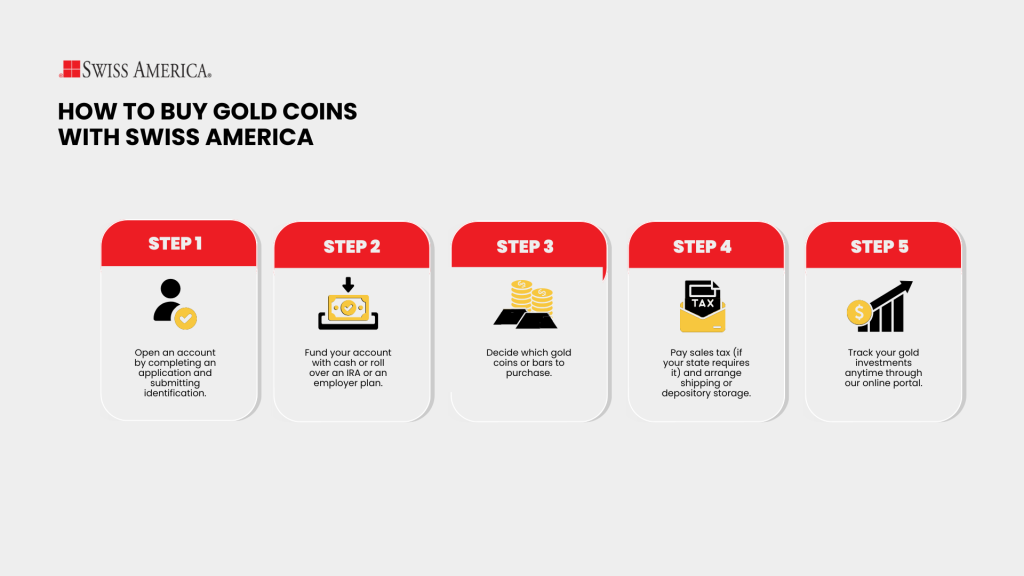
It’s very simple to buy gold coins from Swiss America, and you can do it in five steps:
Step 1: Open an account by completing an application and submitting identification.
Step 2: Fund your account with cash or roll over an IRA or an employer plan like a 401(k), TSP, or 403(b).
Step 3: Decide which gold coins or bars to purchase.
Step 4: Pay sales tax (if your state requires it) and arrange shipping or depository storage.
Step 5: Track your gold investments anytime through our online portal.
Final thoughts on investing in gold coins
Gold is an investor’s insurance policy. It’s the tangible asset people buy to reduce risk and diversify their wealth. Gold coins are a great way to begin protecting your financial well-being.
Connect with the Swiss America team today to learn more about gold investing.
How to buy gold coins: FAQs
How can beginners buy gold coins?
Beginners can buy gold coins by deciding how much to invest and working with a reputable dealer who can guide you through the process.
How much gold can you buy for $1000?
As of this writing, gold is .../ounce, which limits the amount you can buy with $1,000. You could look at fractional gold coins or smaller bars within this budget.
Is it worth buying gold from Costco?
Buying gold bars from Costco is an option, but you won’t receive personalized support and recommendations for your portfolio and situation.
The information in this post is for informational purposes only and should not be considered tax or legal advice. Please consult with your own tax professionals before making any decisions or taking action based on this information.